
From brushed satin to mirror-bright — precision surface grinding and polishing for decorative, architectural, and functional aluminum applications.
CANEX's grinding and polishing service achieves surface roughness as low as Ra 0.1–0.2 μm — producing a near-mirror finish on aluminum profiles and cast components. The process uses progressively finer abrasive belts or wheels to remove surface defects, die marks, and the native aluminum oxide layer, leaving a clean, highly reflective surface ready for decorative or high-specification functional use.
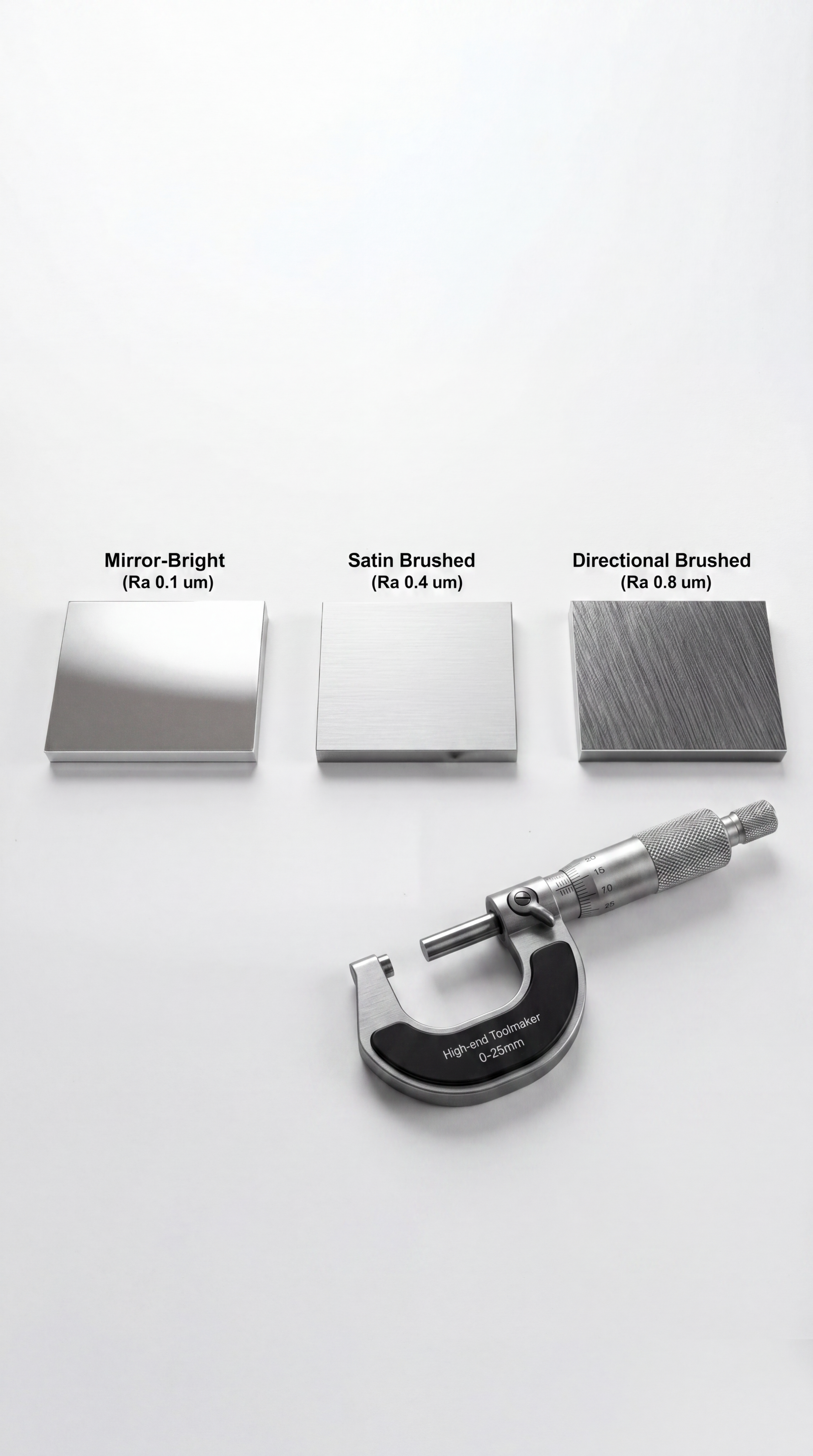
The process is performed mechanically using controlled-pressure belt grinding and polishing equipment. By selecting the appropriate abrasive sequence and finishing wheel, we can produce three primary finish types: mirror-bright, satin brushed, and directional brushed — each with distinct visual characteristics and surface roughness values.
Grinding and polishing is also used as a pre-treatment step before anodizing or high-quality powder coating, where removing extrusion die marks significantly improves the uniformity and reflectivity of the final anodized or coated surface. The best-suited alloys for polishing are the decorative 6063, 6463, and 6060 grades, which have the fine grain structure needed for a consistent reflective result.
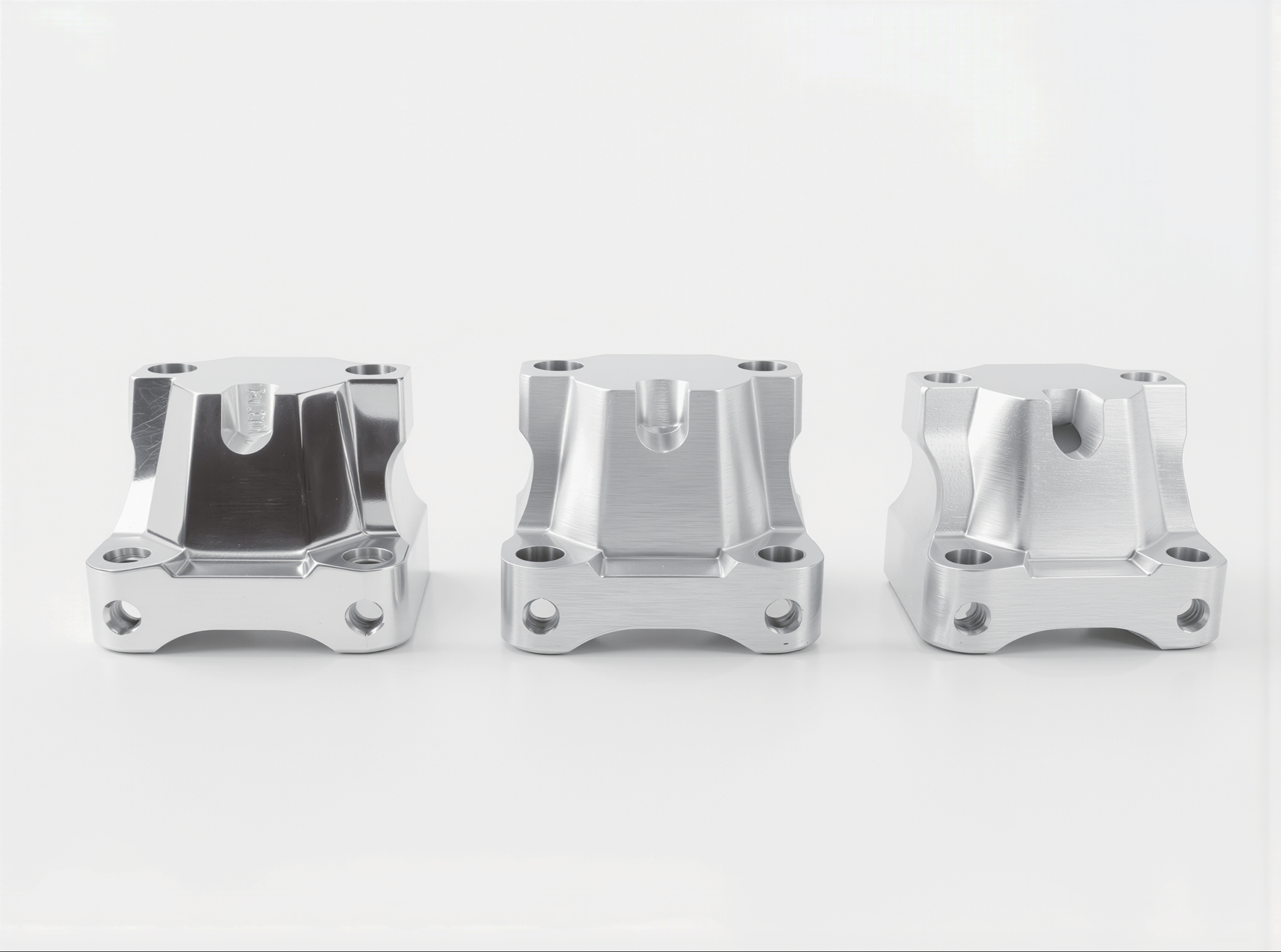
Each polishing grade has a distinct surface roughness target and visual outcome. Specify the grade that best matches your application requirements.
Mirror Bright
Ra < 0.2 μm
The highest achievable reflectivity on aluminum — a near-perfect mirror surface achieved through multi-stage progressive abrasive polishing followed by buffing compound. Specified for premium decorative, display, and optical applications where maximum reflectivity is required.
Satin Brushed
Ra ~ 0.4 μm
A semi-gloss brushed surface with fine, consistent directional grain. Retains a bright metallic appearance while reducing specular glare compared to mirror finish. Popular for consumer electronics, architectural trim, and premium furniture applications.
Directional Brushed
Ra ~ 0.8 μm (custom grit)
A deeper directional grain achieved with a specific abrasive grit, creating a tactile surface texture. The grain direction and depth can be specified to suit the application — from fine satin to more pronounced industrial brushed effects.
Technical parameters for CANEX grinding and polishing — surface roughness capabilities, compatible materials, and recommended alloys.
| Min. Roughness | Ra 0.1–0.2 μm (mirror finish) |
| Max. Roughness | Ra ~0.8 μm (directional brushed, custom grit) |
| Finish Options | Mirror-bright, satin brushed, directional brushed |
| Compatible Materials | Extrusion profiles, die cast components |
| Best Alloys | 6063, 6463, 6060 (decorative alloys) |
| Pre-Treatment Use | Often used before anodizing or powder coating |
| Subsequent Processes | Compatible with anodizing, powder coating, clear lacquer |
When to Grind Before Coating
For high-quality decorative applications — particularly anodizing, bright anodizing, or premium powder coating — grinding the profile before the coating process significantly improves the final result. Extrusion die marks, surface waviness, and fine scratches are removed, leaving a uniform base that anodizes evenly and coats without visible surface defects. Architectural trim, retail display fixtures, and consumer product components typically specify pre-coating grinding to achieve a consistent, premium appearance. The grinding stage adds time and cost to the order, but for visible high-end applications the result justifies the investment.
Grinding and polishing is specified for applications where the aluminum surface itself is visible — and where surface quality directly affects product perception and value.
Retail Display Fixtures
Decorative Architectural Trims
Consumer Electronics Enclosures
Premium Furniture
Automotive Trim
Lighting Fixtures & Reflectors
Hospitality & Hotel Fittings
Pre-Anodize Preparation
Get a quote for your specific requirements. Our engineering team responds within 48 hours.