
Controlled blasting creates a uniform matte texture — improving paint adhesion, removing scale, and providing industrial aesthetics on aluminum profiles and castings.
Shot blasting propels abrasive media at high velocity onto the aluminum surface using compressed air or centrifugal force. The impact of thousands of abrasive particles per second creates a uniform, slightly rough surface texture (Ra approximately 3.2 μm) — removing scale, surface contaminants, die marks, and the native aluminum oxide layer while simultaneously creating a mechanical key in the surface that dramatically improves adhesion for subsequent coatings.
CANEX uses three primary abrasive media types — steel shot, glass bead, and aluminum oxide — each producing a slightly different surface profile and visual result. The choice of media is matched to the application: aluminum oxide is preferred for profiles that will be powder coated (better adhesion profile), while glass bead produces a cleaner, brighter matte appearance for aesthetic industrial applications.
Shot blasting is used at CANEX both as a standalone finish — for industrial and heavy-duty structural profiles where a matte, non-reflective texture is the required aesthetic — and as a pre-treatment step before powder coating, where it replaces or supplements the chemical pretreatment tunnel to provide maximum mechanical adhesion for demanding environments.
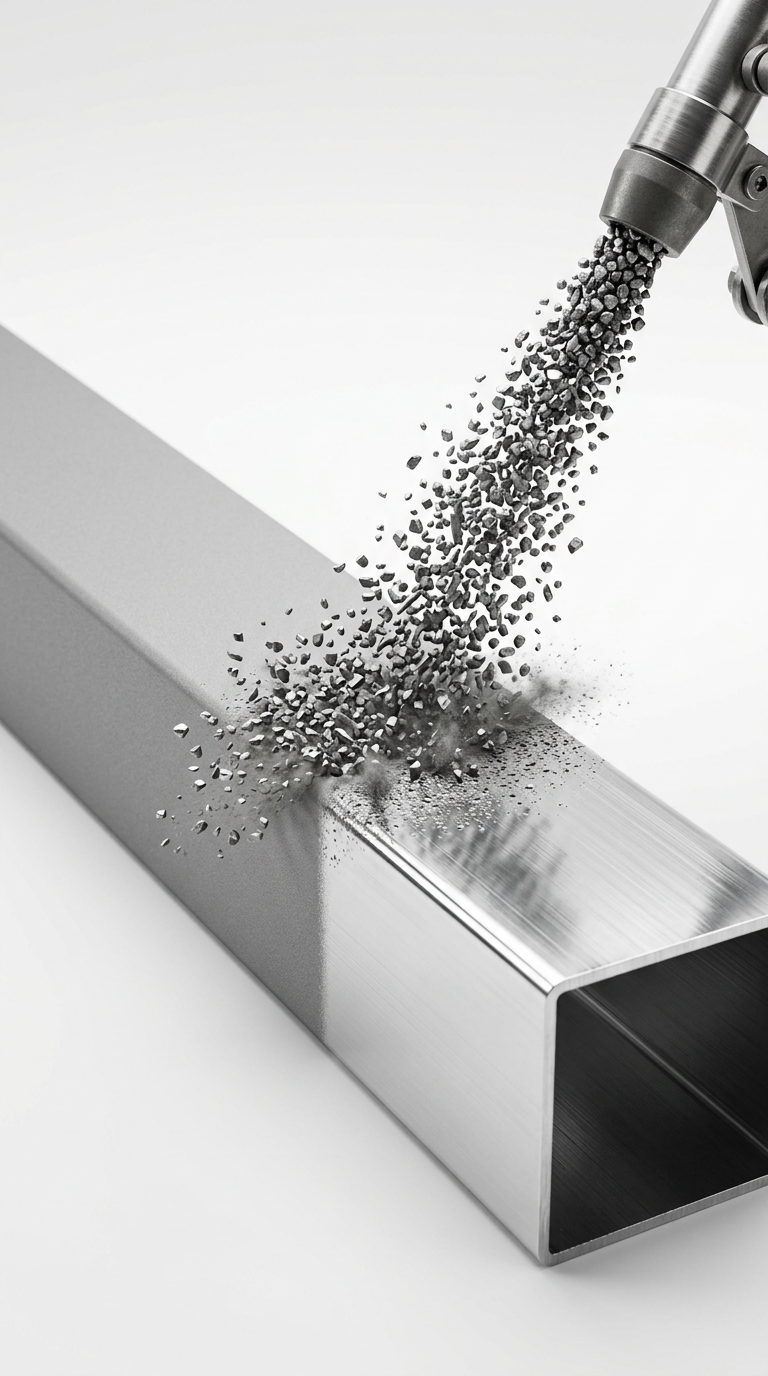
The media type determines the surface profile, cleanliness, and visual result of the shot blasting process. CANEX selects the appropriate media based on the application and subsequent process.
Steel Shot
Round steel media produces a peened, uniform matte surface with a slight metallic sheen. Preferred for heavy-duty industrial applications and components requiring good fatigue resistance. More aggressive surface profile for maximum coating adhesion.
Glass Bead
Spherical glass media produces a cleaner, brighter matte finish with a finer surface profile. Preferred for applications where a cleaner industrial aesthetic is required, or for profiles that will be anodized after blasting to achieve a uniform matte anodized appearance.
Aluminum Oxide
Angular aluminum oxide abrasive creates the most aggressive surface profile and the best mechanical key for coating adhesion. The preferred media for profiles that will receive powder coating in demanding environments — marine, industrial, or heavy weather exposure.
Technical parameters for CANEX shot blasting — process, surface roughness, media options, and compatibility data.
| Process | High-velocity abrasive blasting |
| Abrasive Media | Steel shot, glass bead, or aluminum oxide (application-dependent) |
| Surface Roughness | Ra ~ 3.2 μm |
| Appearance | Uniform matte, slightly textured, non-directional |
| Primary Benefit | Improved coating adhesion + surface cleaning |
| Compatible With | All alloys, extrusion profiles, die cast components |
| Subsequent Processes | Powder coating, anodizing, or standalone industrial finish |
| Max Profile Length | Up to 13 m (matched to extrusion length) |
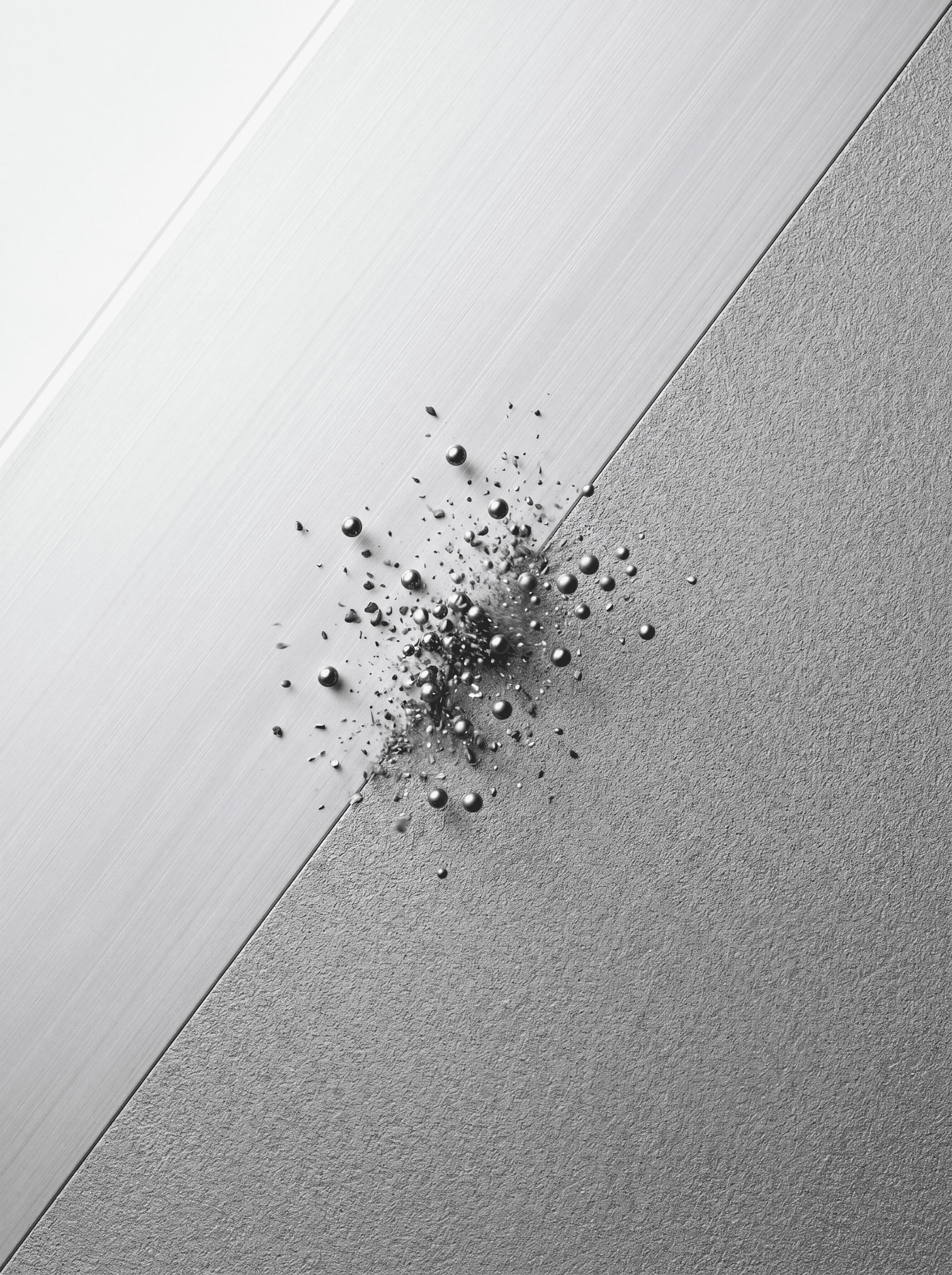
Shot blasting is specified in three distinct scenarios — each with different primary motivations but all benefiting from the same controlled abrasive process.
Before Powder Coating
For maximum coating adhesion — particularly for profiles in aggressive environments (coastal, marine, heavy industrial) — shot blasting with aluminum oxide abrasive creates the mechanical profile that allows powder to bond with exceptional grip. Used in addition to or in place of the chemical pretreatment for the most demanding applications.
Industrial Aesthetic Requirements
Many industrial, commercial, and heavy construction applications specify a consistent matte surface that is non-reflective, hides minor surface imperfections, and presents a uniform industrial appearance. Shot blasting achieves this aesthetic on any aluminum profile or casting, in any alloy, without coating.
Heavy-Duty Structural Applications
Structural aluminum components — particularly those used in construction, marine, or oil and gas environments — benefit from shot blasting to remove scale, weld spatter, and surface contamination before protective coating application. Shot blasting ensures the clean, prepared surface needed for coating systems to achieve their rated performance life.
Mill finish is the economical base option, but for applications where coating performance or industrial aesthetics are required, shot blasting delivers significant advantages across every metric that matters.
| Property | Shot Blasted | Mill Finish |
|---|---|---|
| Coating Adhesion | ✓ Maximum — mechanical key for powder | Adequate — chemical pretreatment only |
| Surface Defect Removal | ✓ All die marks, scale, contamination removed | Die marks remain visible |
| Surface Consistency | ✓ Uniform matte across entire profile | Variable — die condition dependent |
| Industrial Aesthetic | ✓ Consistent matte-industrial appearance | Slightly reflective, die lines visible |
| Surface Roughness | Ra ~3.2 μm (ideal for coating) | Ra 0.4–1.6 μm (too smooth for best adhesion) |
| Cost | Low additional cost over mill finish | ✓ Lowest — no additional process |
Shot blasting is specified across industrial, construction, marine, and heavy structural applications — wherever surface preparation quality directly affects coating performance or structural integrity.
Industrial Structural Profiles
Heavy-Duty Construction Elements
Machinery Components
Pre-Treatment for Powder Coating
Marine Structural Components
Oil & Gas Equipment
Bridge & Infrastructure Profiles
Die Cast Industrial Housings
Get a quote for your specific requirements. Our engineering team responds within 48 hours.