
Healthcare &
Medical
Safety, hygiene, and precision define aluminum's role in healthcare environments. CANEX manufactures cleanable, corrosion-resistant profiles for patient beds, IV poles, wheelchair ramps, and medical equipment frames used in hospitals and care facilities worldwide.
Healthcare Environments
Aluminum's combination of light weight, corrosion resistance, and hygienic surface characteristics makes it the material of choice for healthcare equipment manufacturers worldwide. Patient bed frames, IV stands, wheelchair ramps, and diagnostic equipment all demand dimensional accuracy, cleanability, and long service life.
CANEX manufactures precision aluminum extrusions specifically suited to healthcare applications — from smooth-surface anodized profiles that resist bacterial adhesion, to structural sections for mobility equipment and clinical furniture. Every profile is produced under ISO 9001:2015 quality management, with full material traceability documentation for medical procurement.
Our 6063-T5/T6 alloy profiles with Ra ≤ 0.8μm surface finish meet the demanding hygiene requirements of hospital environments, including compatibility with standard clinical cleaning and disinfection protocols.
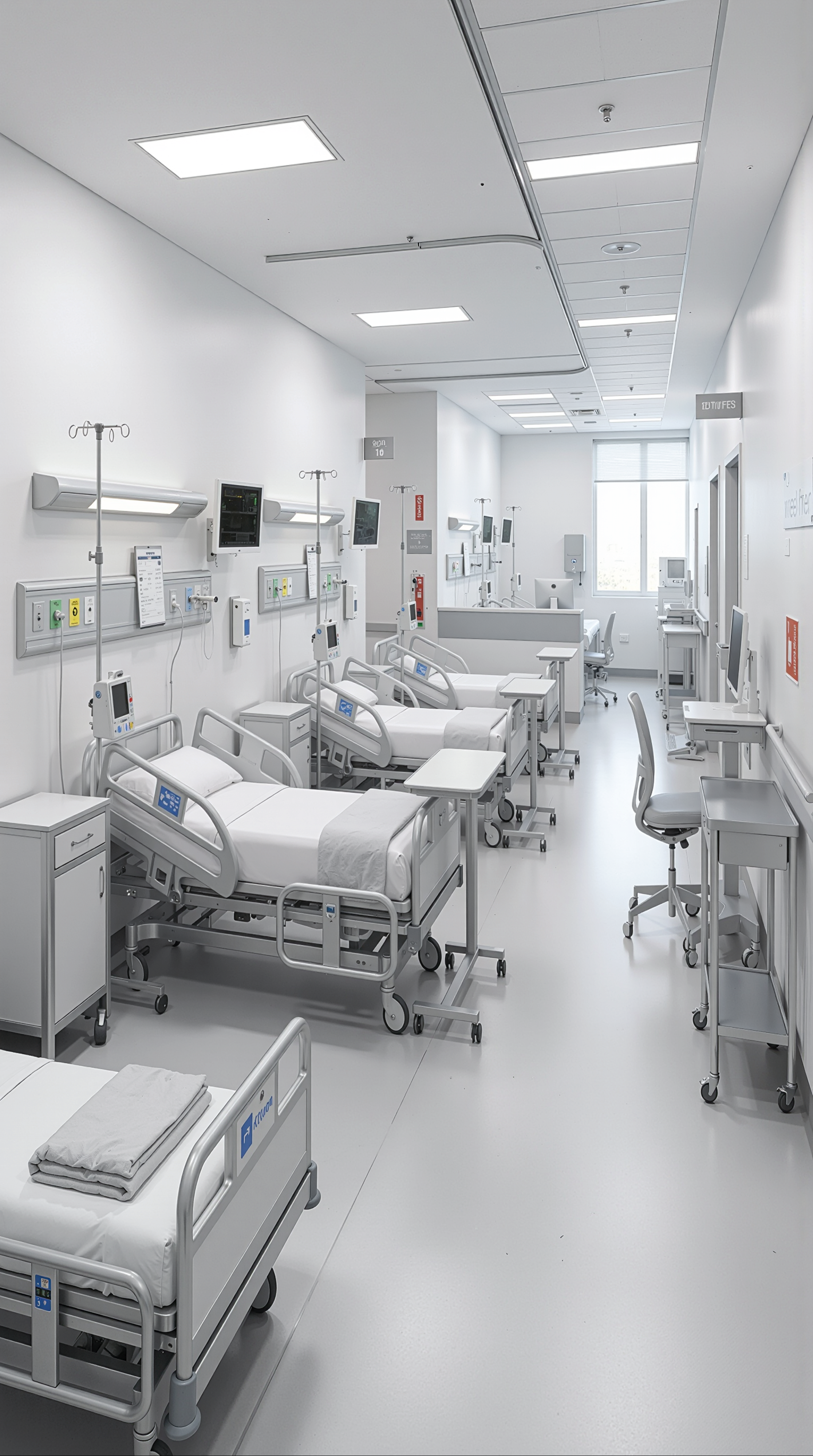
Healthcare
Application
Patient Bed Frame Sections
Precision 6063-T5/T6 hollow and open sections for hospital bed frame construction — side rails, longitudinal members, headboard/footboard extrusions, and adjustable base sections with smooth, cleanable surfaces.
Request Samples →IV Pole & Stand Profiles
Lightweight aluminum tube and rod sections for IV pole shafts and infusion stand columns. Anodized finish provides hygienic, corrosion-resistant surfaces compatible with hospital cleaning agents.
Get a Quote →Wheelchair Ramp Extrusions
Structural ramp sections, non-slip surface channels, and edge trim profiles for wheelchair and mobility ramp systems. Available in 6063-T6 and 6061-T6 alloys to meet required load specifications.
Get a Quote →Medical Equipment Trolleys
Frame extrusions for clinical equipment trolleys, medication carts, and instrument transport systems. Lightweight yet rigid profiles for easy patient-area manoeuvring.
Request Samples →Hospital Partition Profiles
Glazed partition framing and cubicle screening extrusions for ward dividers, clinical area separations, and modular hospital partition systems requiring hygienic cleanable surfaces.
Get a Quote →Medical Device Housings
Precision hollow and complex-section profiles for diagnostic equipment frames, imaging device housings, and medical instrument enclosures. Tight dimensional tolerances for assembly-line production.
Submit Your Drawing →Used

Hospital Patient Bed Frames
Lightweight aluminum frame sections for adjustable hospital beds — side rails, head/footboard profiles, and adjustable base mechanisms.
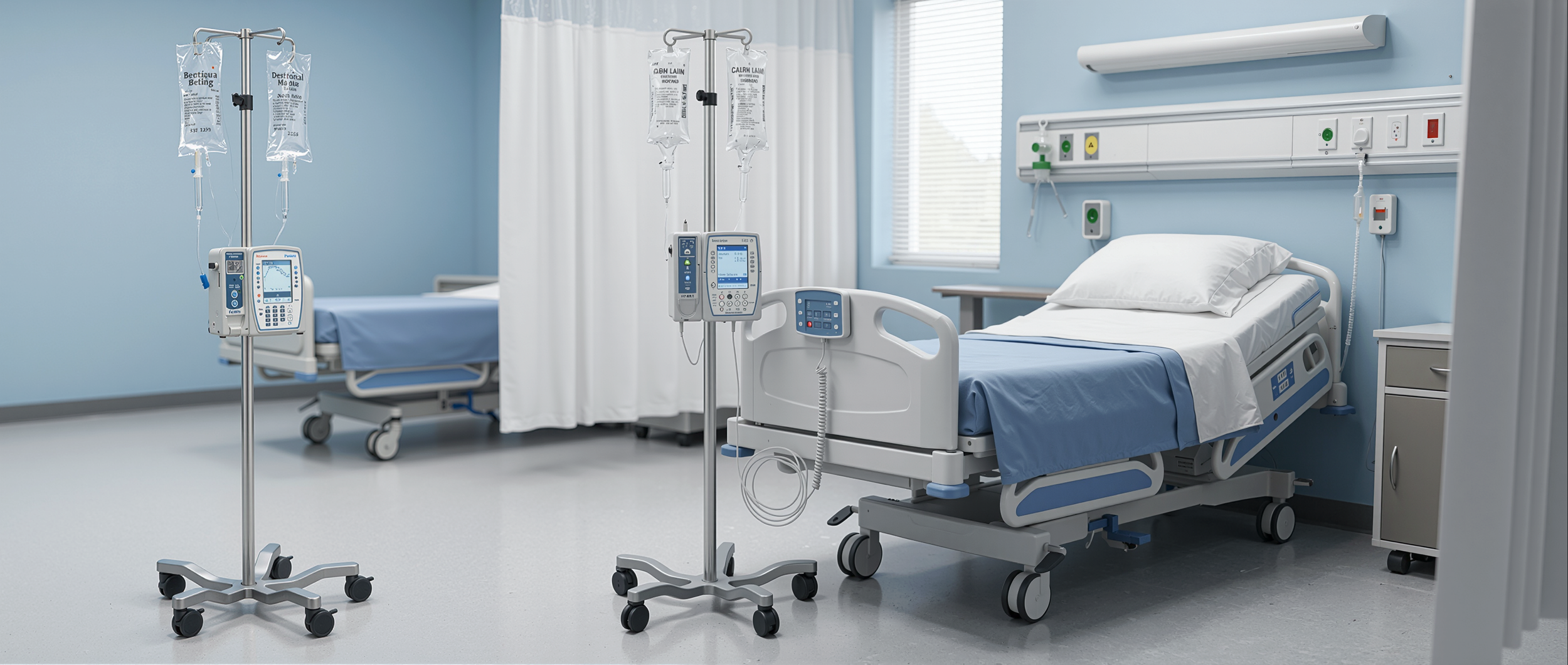
IV & Infusion Stands
Corrosion-resistant, cleanable aluminum tube profiles for IV pole shafts and infusion stand structures in clinical environments.
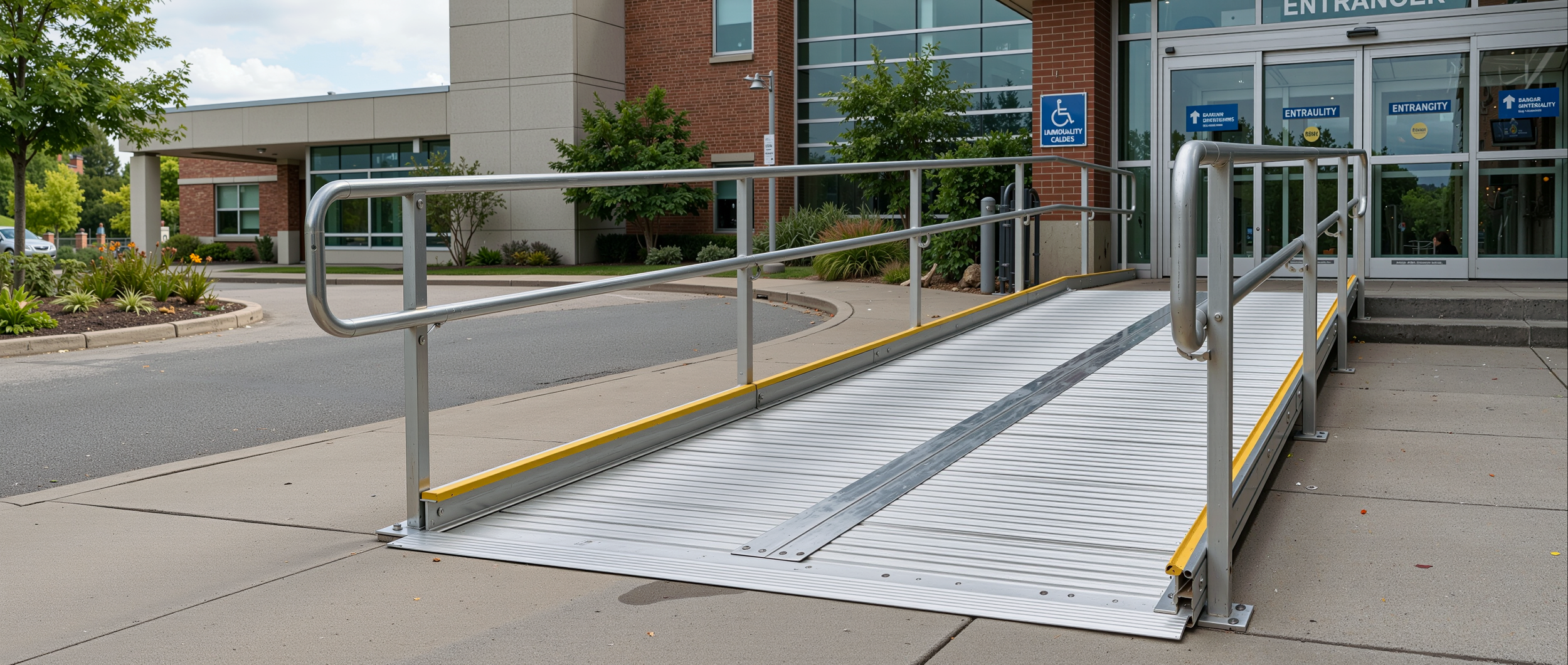
Wheelchair & Mobility Ramps
Structural aluminum ramp sections and non-slip surface extrusions for wheelchair ramps in hospital and care facility environments.

Surgical Equipment Trolleys
Lightweight frame extrusions for clinical trolleys, instrument carts, and equipment transport systems in surgical and ward environments.
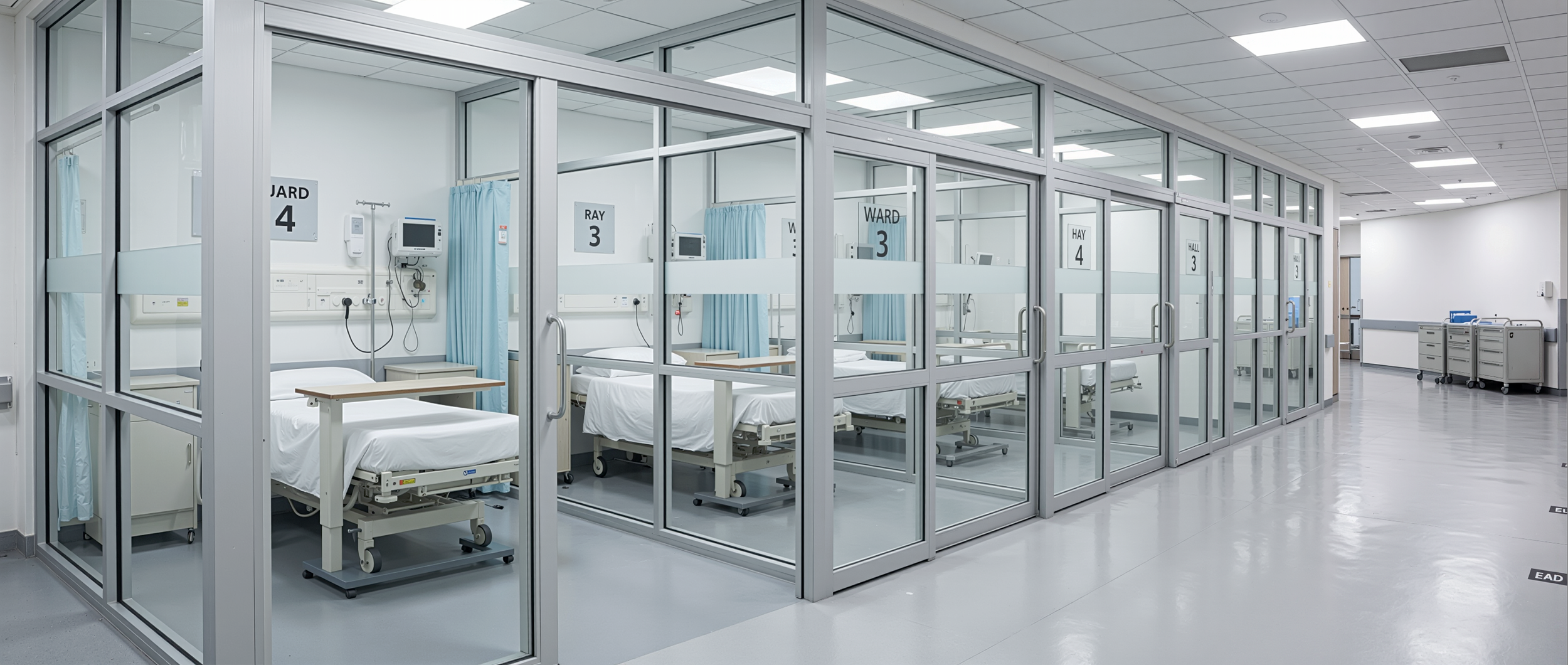
Ward Partition Systems
Hygienic glazed partition framing and cubicle screening profiles for modular ward divider and clinical area separation systems.

Diagnostic Equipment Frames
Precision-extruded housing and frame profiles for imaging equipment, diagnostic devices, and medical instrument enclosures.
| Parameter | Specification |
| Primary Alloys | 6063-T5, 6063-T6 (standard); 6061-T6 for structural ramp and load-bearing sections |
| Surface Finish | Anodizing (hygienic & cleanable); powder coating (antimicrobial options available) |
| Hygienic Surface Roughness | Ra ≤ 0.8μm for hygienic/cleanable surface profiles |
| Anodize Options | Standard (15–20 μm), Hard anodize (25–50 μm) for wear resistance |
| Powder Coat | 60–80 μm standard; antimicrobial additive options available on request |
| Dimensional Tolerance | EN 755 (Class A & B) for all structural and fit-critical sections |
| Wall Thickness | From 1.2 mm to 15+ mm depending on section type |
| CCD Range | Up to 350 mm (standard press capacity) |
| Length | Standard 6 m; custom lengths on request |
| Certifications | ISO 9001:2015, ISO 14001:2015; full material test certificates supplied |
Manufacturers Choose
CANEX
Hygienic Surface Finishes
Ra ≤ 0.8μm surface finish with anodizing or antimicrobial powder coating options — compatible with hospital-grade disinfection protocols and infection control requirements.
Corrosion-Resistant Alloys
6063-T5/T6 aluminum provides excellent corrosion resistance against common clinical cleaning agents, ensuring long service life in demanding healthcare environments.
Lightweight for Patient Handling
Aluminum's high strength-to-weight ratio is critical for patient beds, IV stands, and mobility equipment — reducing staff effort and improving patient handling safety.
ISO 9001 Documentation
Full material test certificates, dimensional conformity reports, and ISO 9001:2015 documentation supplied with every order — meeting medical procurement requirements.
Questions
What aluminum profiles does CANEX supply for hospital beds?
CANEX supplies precision-extruded 6063-T5/T6 aluminum sections for patient bed frames, including side rail channels, headboard/footboard extrusions, and adjustable base frame profiles. All profiles are available with hygienic anodized or powder-coated finishes suitable for hospital cleaning regimes.
What hygienic finishes are available for medical aluminum profiles?
CANEX offers anodized finishes (hard anodize and standard anodize) and powder coating with antimicrobial options. Surface roughness Ra ≤ 0.8μm is achievable for profiles requiring hygienic cleanability, reducing bacterial adhesion and supporting infection control protocols.
Does CANEX produce aluminum extrusions for IV poles?
Yes. CANEX manufactures lightweight, corrosion-resistant aluminum tube and hollow sections for IV pole shafts, infusion stand columns, and height-adjustment mechanisms. 6063-T5/T6 alloy is standard; anodized finish provides a hygienic, durable surface.
Can CANEX supply aluminum profiles for wheelchair ramps?
Yes. CANEX supplies structural aluminum ramp sections, non-slip surface extrusions, and edge trim profiles for wheelchair and mobility ramps. These are available in 6063-T6 and 6061-T6 for the required load ratings, with slip-resistant mill or anodized finishes.
Is CANEX ISO 9001 certified for medical equipment supply?
Yes. CANEX holds ISO 9001:2015 certification. We can provide full material test certificates, EN 755 dimensional conformity documentation, and surface finish reports — the documentation package typically required for medical and healthcare procurement.
What is the difference between anodizing and powder coating for healthcare applications?
Anodizing creates an integral oxide layer on the aluminum surface — extremely hard, non-peeling, and easy to clean with hospital-grade disinfectants. Powder coating provides a broader color range and can incorporate antimicrobial additives, but is a surface coating rather than integral to the metal. For sterile-critical applications, anodizing is typically preferred.
Send us your cross-section drawings or system requirements and our team will respond within 48 hours.