
Dense, robust aluminum castings using gravity-filled permanent molds — cost-effective tooling for medium-to-high volume production.
Gravity Die Casting (GC), also known as permanent mold casting, uses the force of gravity to fill a permanent steel mold with molten aluminum. Unlike sand casting — which requires a new mold for each pour — the reusable steel die in GC can produce thousands of identical components, delivering significantly better dimensional accuracy, smoother surface finish, and more consistent mechanical properties across the production run.
CANEX produces all GC tooling in-house, keeping die fabrication costs low and lead times short. The mold is pre-heated before each pour to control metal flow and solidification, and a precise melt temperature of ±5°C is maintained throughout production for consistent output quality.
As with LPDC, CANEX uses upcycled aluminum scrap from its own extrusion lines as the raw casting material. This closed-loop approach turns production waste into high-value components — eliminating landfill, reducing energy consumption, and cutting material costs simultaneously.
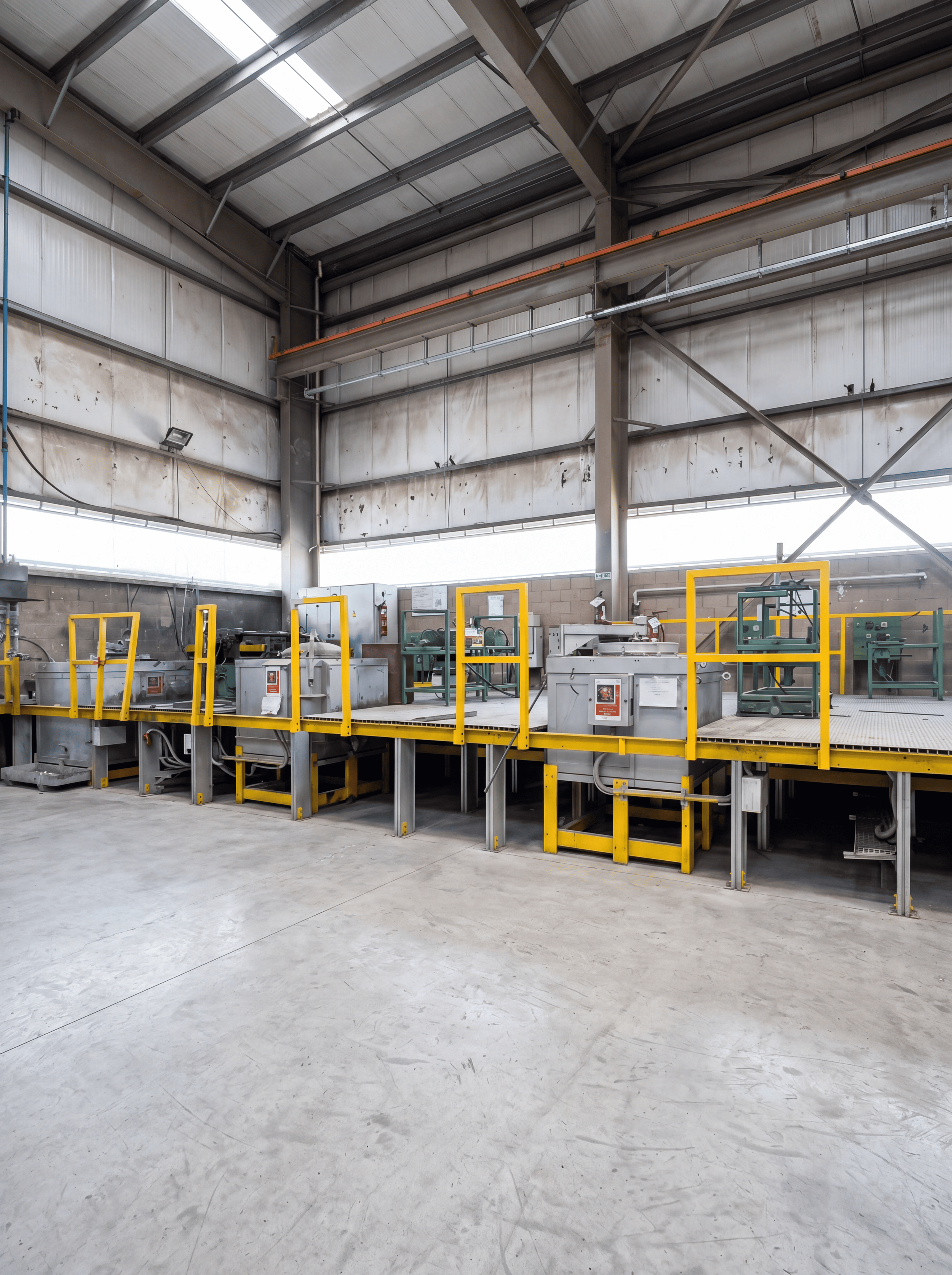
CANEX's gravity die casting process follows a proven seven-stage workflow — from raw material preparation through to finished, quality-controlled components ready for dispatch.
01
Upcycled Scrap
Preparation
02
Alloy Melting
(±5°C)
03
Die
Pre-Heating
04
Gravity
Pour
05
Controlled
Solidification
06
Ejection &
Trimming
07
Finishing
& QC
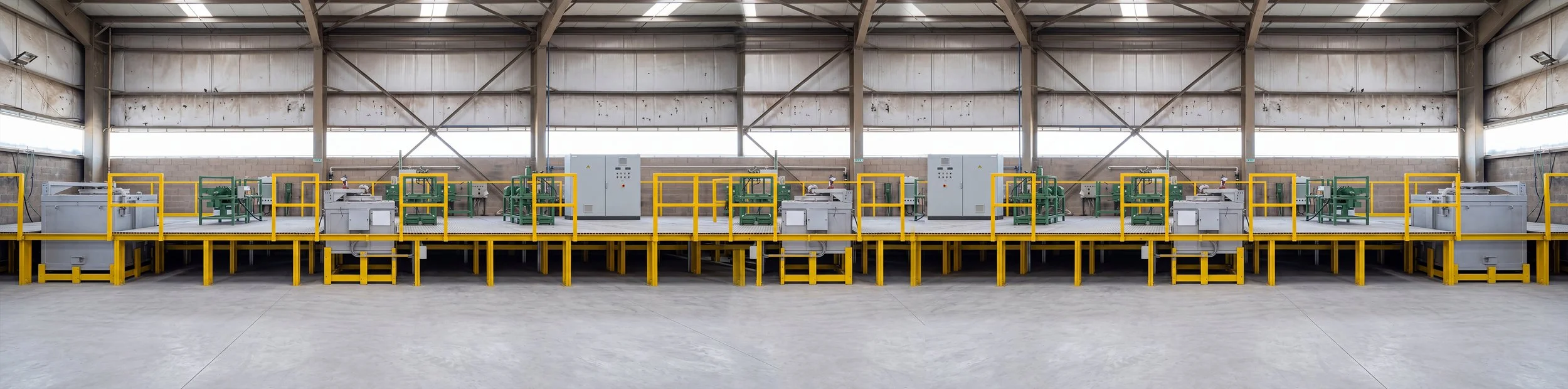
Key technical parameters for CANEX Gravity Die Casting — permanent-mold process with in-house tooling and circular raw material sourcing.
| Method | Gravity Die Casting — Permanent Mold |
| Mold Type | Permanent steel die (reusable) |
| Max Product Size | Up to 1.5 meters |
| Melt Control | ±5 °C temperature precision |
| Surface Roughness | Ra 3.2–6.3 μm |
| Heat Treatment | T4, T5, T6, T7 |
| Raw Material | Upcycled extrusion scrap — zero-waste |
| Typical Alloys | A380, A356, or equivalent from in-house scrap |
| Tooling | In-house permanent steel dies |
| Secondary Operations | Machining, drilling, surface finishing available |
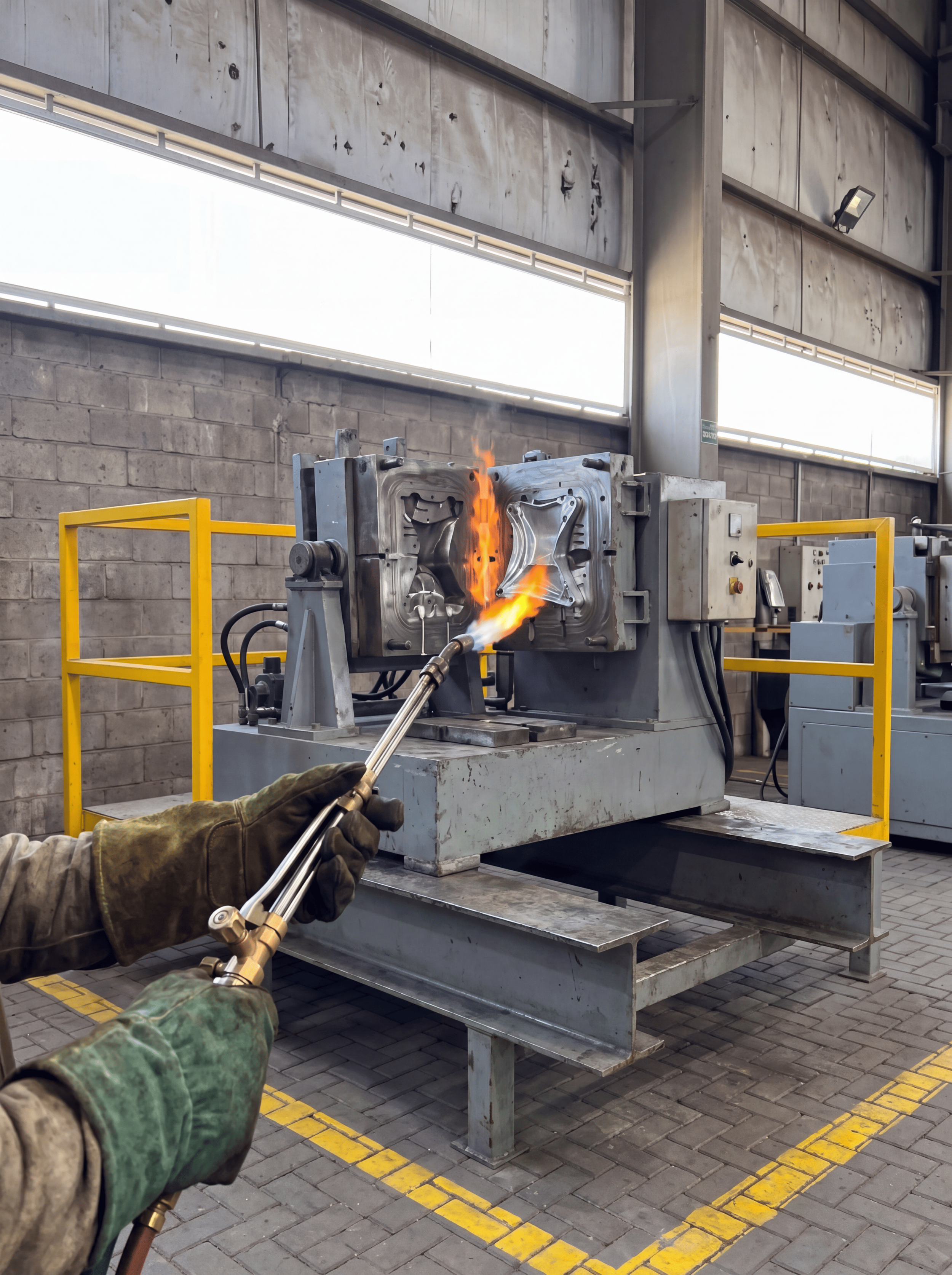
Gravity die casting consistently outperforms sand casting across the metrics that matter most for production quality and economics.
| Property | Gravity Die Casting (GC) | Sand Casting |
|---|---|---|
| Surface Finish | ✓ Ra 3.2–6.3 μm | Ra 12.5–25 μm (rougher) |
| Dimensional Accuracy | ✓ Higher — steel mold | Lower — sand variation |
| Tooling Reusability | ✓ Thousands of cycles | Single use — new mold each pour |
| Cycle Time | ✓ Faster for repeat runs | Slower — mold preparation each time |
| Mechanical Properties | ✓ Better consistency | More variability batch to batch |
| Cost Per Unit (High Volume) | ✓ Lower — amortized tooling | Higher — consumable mold cost |
| Design Complexity | Good — permanent mold constraints | ✓ More flexible for complex geometry |
Gravity die casting is the cost-optimal casting method for medium-to-high volume production of structural and non-pressure aluminum components.
Reusable Tooling Economics
The permanent steel mold is an investment that pays dividends across thousands of production cycles. As volume grows, the cost per component drops significantly — making GC the economically superior choice for medium-to-high volume parts.
Circular Raw Material
Every GC pour begins with upcycled aluminum from CANEX's own extrusion scrap stream. No virgin ingot, no external scrap purchasing — just a closed-loop system that eliminates waste and reduces both cost and carbon footprint.
Full In-House Integration
CANEX makes the die, pours the casting, machines the component, and applies the surface finish — all in-house. One supplier, one quality system, one invoice. Simpler project management and faster turnaround than multi-vendor casting supply chains.
Gravity die casting is ideal for structural, decorative, and general engineering components where pressure-critical performance is not required but dimensional accuracy and surface quality matter.
General Structural Components
Brackets & Housings
Non-Pressure Components
Decorative Hardware
Consumer Product Components
Industrial Equipment Parts
Architectural Fittings
Furniture & Fixture Hardware
Get a quote for your specific requirements. Our engineering team responds within 48 hours.